

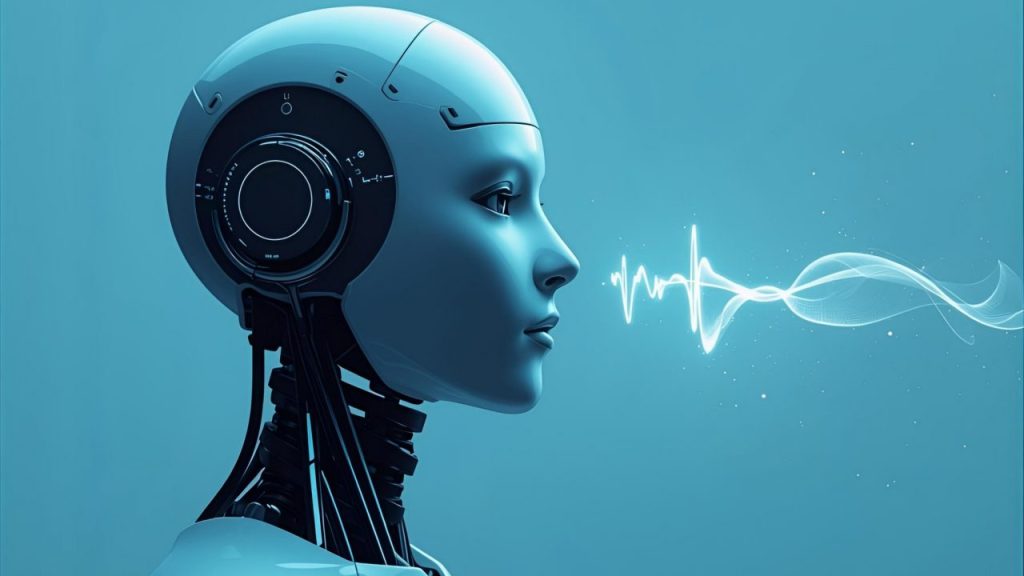
Artificial intelligence has moved from the realm of science fiction to the center of our daily lives. In early 2026, the pace of AI development shows no sign of slowing—instead, it’s accelerating with tangible impacts on industries, economies, and individual experiences. From healthcare diagnostics to creative workflows, AI is reshaping how we work, communicate, and solve problems. But amid the flood of headlines about “AI breakthroughs,” it’s crucial to separate genuine innovation from marketing spin.
This post explores the most significant AI developments of the past year, grounded in real-world applications, expert analysis, and credible research. Whether you’re a developer, business leader, policymaker, or simply curious about where this technology is taking us, understanding the current landscape is essential for navigating the future intelligently.
The Quiet Rise of Multimodal AI
One of the most transformative shifts in recent AI development is the move toward multimodal systems—models that can process and generate text, images, audio, and even video in a unified framework. Unlike earlier models trained exclusively on text (like the original GPT-3), today’s leading systems understand context across sensory inputs.
For example, OpenAI’s latest multimodal model can interpret a hand-drawn sketch and generate a photorealistic image, then describe it in natural language—all in one coherent interaction. Similarly, Google’s Gemini platform demonstrates advanced reasoning by analyzing a video of a physics experiment and explaining the underlying principles in real time.
These capabilities aren’t just academic curiosities. In education, multimodal AI tutors can adapt explanations based on a student’s visual notes or spoken questions. In manufacturing, AI systems analyze both sensor data and maintenance logs to predict equipment failures more accurately than single-modality models ever could.
According to a 2025 report from Stanford’s AI Index, multimodal models now account for over 60% of new large-scale AI deployments in enterprise settings—a clear signal that cross-modal understanding is becoming the new baseline for intelligent systems.
Small Language Models Are Having a Moment
While much attention still focuses on massive foundation models with billions of parameters, a counter-trend is gaining momentum: the rise of small language models (SLMs). These compact, efficient models—often under 10 billion parameters—deliver impressive performance while requiring far less computational power.
Microsoft’s Phi-3 series, for instance, rivals the reasoning capabilities of much larger models but runs smoothly on smartphones and edge devices. This shift is critical for real-world deployment. Hospitals can now use on-device AI for patient triage without sending sensitive data to the cloud. Farmers in remote regions leverage SLM-powered apps to diagnose crop diseases using only a basic smartphone.
The appeal isn’t just technical—it’s economic and ethical. Smaller models reduce energy consumption, lower costs, and enhance data privacy. As noted by researchers at MIT’s Computer Science and Artificial Intelligence Laboratory, SLMs trained on high-quality, domain-specific datasets often outperform bloated general-purpose models in specialized tasks like legal contract review or medical coding.
This democratization of AI means that startups and public institutions no longer need billion-dollar budgets to harness cutting-edge intelligence. The barrier to entry is falling, and innovation is spreading beyond Silicon Valley.
AI Regulation: From Theory to Enforcement
As AI becomes more embedded in society, governments are moving from discussion to action. The European Union’s AI Act, which took full effect in late 2025, now classifies AI systems by risk level—from minimal (e.g., spam filters) to unacceptable (e.g., real-time biometric surveillance in public spaces). High-risk applications, such as hiring algorithms or credit scoring tools, must undergo rigorous transparency and bias audits.
Meanwhile, the U.S. has adopted a more sectoral approach. The National Institute of Standards and Technology (NIST) released its AI Risk Management Framework, which is now being integrated into federal procurement rules. Companies bidding for government contracts must demonstrate how they mitigate AI-related harms like discrimination or security vulnerabilities.
These regulations aren’t stifling innovation—they’re creating guardrails that build public trust. A 2025 survey by the Pew Research Center found that 72% of Americans support mandatory testing for AI systems used in healthcare or criminal justice. Clear rules help responsible developers stand out from those cutting corners.
Generative AI in the Workplace: Beyond the Hype
Generative AI tools like GitHub Copilot and Adobe Firefly have moved from novelty to necessity in many professional workflows. But their real value lies not in replacing humans, but in augmenting them.
Software engineers using AI pair programmers report up to a 30% increase in coding speed, according to a study published in Nature. However, the same study cautions that overreliance can lead to subtle bugs—highlighting the need for human oversight.
In marketing, generative AI drafts email campaigns, social posts, and ad copy in seconds. Yet top-performing teams treat these outputs as first drafts, refining tone and strategy based on brand voice and audience insights. The AI handles repetition; the human provides nuance.
Perhaps most promising is AI’s role in knowledge management. Tools like Notion AI and Microsoft Loop automatically summarize meeting notes, extract action items, and connect related documents across platforms. This reduces cognitive load and helps teams stay aligned without endless status meetings.
The key takeaway? AI excels at scale and speed, but human judgment remains irreplaceable for context, ethics, and creativity.
The Hidden Challenge: AI Hallucinations and Reliability
Despite rapid progress, AI systems still suffer from hallucinations—confidently generating false or fabricated information. This remains a critical barrier in high-stakes domains like law, medicine, and journalism.
In 2025, a major hospital system paused its AI diagnostic pilot after the system incorrectly flagged benign skin lesions as malignant in several cases. While the overall accuracy was high, the cost of false positives was too great. Such incidents underscore why “accuracy” alone isn’t enough—reliability under uncertainty matters just as much.
Researchers are tackling this through techniques like retrieval-augmented generation (RAG), where AI models pull facts from verified databases before responding. Others are developing “uncertainty calibration” methods that prompt the AI to say “I don’t know” when confidence is low.
The Allen Institute for AI has been at the forefront of this work, advocating for “truthful AI” benchmarks that measure not just correctness, but honesty about limitations. Until these become standard, users must treat AI outputs as suggestions—not gospel.
AI in Climate and Sustainability: A Force Multiplier
Beyond productivity, AI is emerging as a powerful tool in the fight against climate change. Climate modeling, once limited by computational constraints, now leverages AI to simulate decades of weather patterns in hours.
Google’s DeepMind collaborated with the European Centre for Medium-Range Weather Forecasts to develop an AI system that predicts extreme weather events with greater accuracy than traditional models. This enables earlier evacuations and better resource allocation during disasters.
In energy, AI optimizes smart grids by forecasting demand and adjusting renewable output in real time. Startups like WattTime use AI to help companies shift computing loads to times when the grid is powered by clean energy—reducing carbon footprints without sacrificing performance.
Even agriculture benefits: AI-powered drones monitor crop health, soil moisture, and pest activity, enabling precision farming that cuts water and pesticide use by up to 40%, according to the Food and Agriculture Organization of the United Nations.
These applications show that AI’s greatest value may lie not in making us richer, but in helping us survive and thrive on a changing planet.
Comparing Leading AI Models in 2026
To cut through the noise, here’s a practical comparison of today’s most influential AI systems based on performance, accessibility, and specialization:
| Model | Developer | Key Strengths | Best For | Access |
|---|---|---|---|---|
| GPT-5 | OpenAI | Advanced reasoning, multimodal fluency, strong coding | Enterprise R&D, creative agencies | API & ChatGPT Plus |
| Gemini Ultra | Scientific reasoning, video understanding, integration with Google Workspace | Research, education, media | Google AI Studio | |
| Claude 4 | Anthropic | Long-context analysis, ethical alignment, document summarization | Legal, compliance, policy | Claude.ai & API |
| Phi-3 Mini | Microsoft | Efficiency, on-device performance, low latency | Mobile apps, edge computing | Azure AI, Windows Copilot |
| Llama 4 | Meta | Open weights, community customization, multilingual support | Developers, academia, startups | Open source (via Hugging Face) |
Note: Performance varies by task; always test models against your specific use case.
This table reflects a maturing ecosystem where choice matters. There’s no single “best” AI—only the right tool for the job.
The Talent Gap: Who’s Building the Future?
As AI adoption grows, so does the demand for skilled practitioners. Yet a global shortage persists. According to the World Economic Forum’s Future of Jobs Report 2025, AI and machine learning specialists remain the fastest-growing job category, with millions of roles unfilled.
Interestingly, the required skill set is evolving. Beyond coding, employers now seek professionals who understand data ethics, domain expertise (e.g., biology for bio-AI), and human-centered design. A radiologist who can fine-tune an AI model for lung scans is more valuable than a generic data scientist with no medical knowledge.
Educational institutions are responding. Coursera and edX now offer microcredentials co-designed with industry leaders like NVIDIA and IBM. Meanwhile, countries like Canada and Singapore are fast-tracking AI visas to attract global talent.
For individuals, the message is clear: specialize, contextualize, and collaborate. AI won’t replace experts—but experts who use AI will replace those who don’t.
Frequently Asked Questions (FAQ)
Q: Is AI going to take my job?
A: AI is more likely to transform your job than eliminate it. Routine tasks—data entry, scheduling, basic analysis—are increasingly automated. But roles requiring empathy, strategic thinking, and complex decision-making are enhanced, not replaced. Upskilling in AI collaboration is the best defense.
Q: How can I tell if an AI tool is trustworthy?
A: Look for transparency: Does the provider disclose training data sources? Is there a way to audit outputs? Does it cite references or allow fact-checking? Tools from reputable organizations like Hugging Face or TensorFlow often include model cards detailing limitations and biases.
Q: Are open-source AI models safe to use?
A: Open-source models offer flexibility and scrutiny but require technical expertise to deploy securely. Always evaluate licensing terms, update frequency, and community support. The Linux Foundation’s AI & Data initiative provides guidelines for responsible open-source AI use.
Q: Can AI be truly creative?
A: AI can remix, recombine, and generate novel outputs—but it lacks intention, emotion, and lived experience. It’s a powerful collaborator for artists, writers, and designers, but the vision and meaning still come from humans.
Q: What’s the biggest risk of AI in 2026?
A: Misinformation at scale. Deepfakes and AI-generated content can erode trust in media and institutions. Solutions include digital watermarking (as promoted by the Partnership on AI) and media literacy education.
Looking Ahead: Intelligence with Integrity
As we stand in early 2026, artificial intelligence is no longer a distant promise—it’s a present reality shaping every facet of modern life. The technology has matured beyond flashy demos into systems that diagnose diseases, optimize supply chains, tutor students, and even help draft legislation.
Yet the most important developments aren’t just technical—they’re cultural and ethical. The conversation has shifted from “Can we build it?” to “Should we, and how?” This maturity is a sign of progress. True innovation isn’t measured by how smart a machine is, but by how wisely we use it.
For businesses, the path forward involves integrating AI thoughtfully—focusing on augmentation over automation, transparency over opacity, and human outcomes over efficiency alone. For individuals, it means staying curious, asking critical questions, and demanding accountability from those who deploy these systems.
The AI revolution isn’t about machines replacing humans. It’s about humans using intelligent tools to solve harder problems, create more beauty, and build a more equitable world. The technology is ready. The question now is whether we are.
To stay informed, follow trusted sources like the AI Now Institute, engage with open standards from IEEE, and experiment responsibly with tools that empower rather than overwhelm. The future of AI isn’t written in code alone—it’s shaped by all of us.